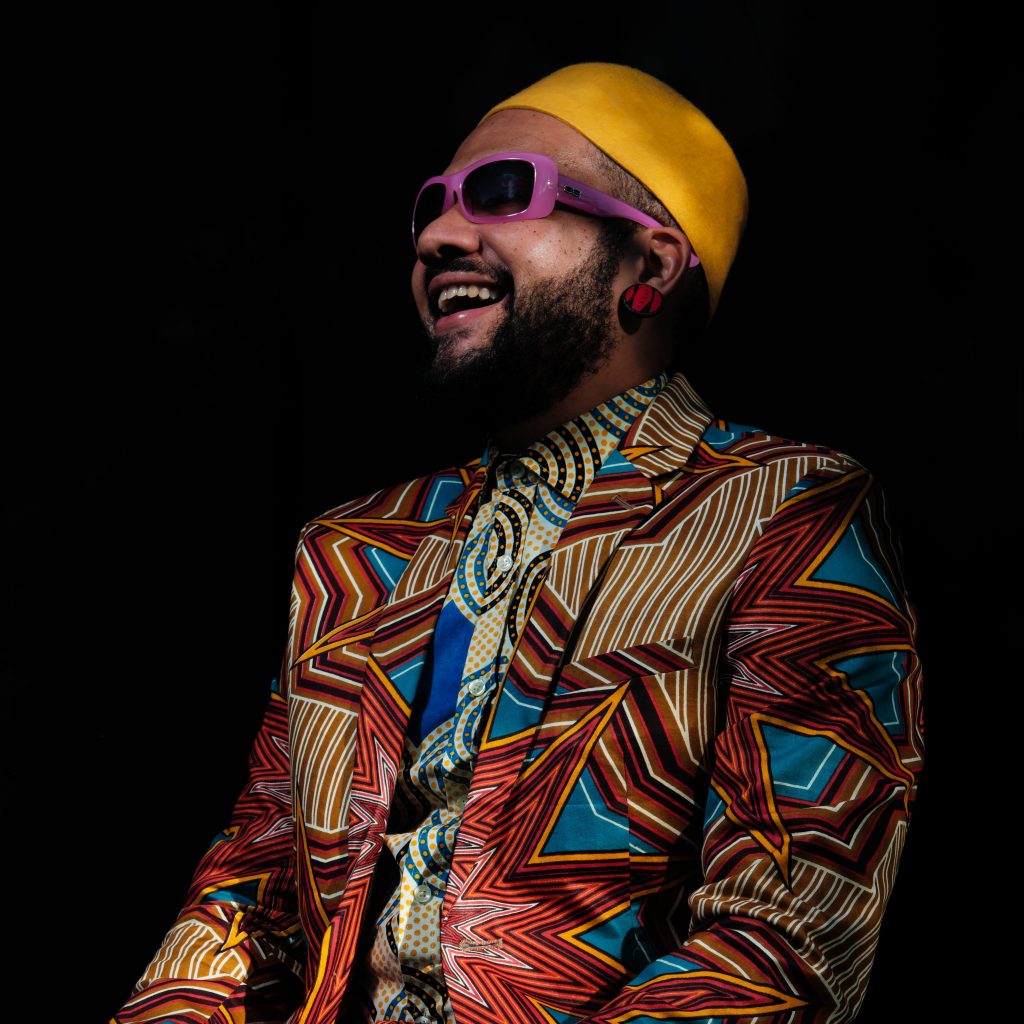
Step into the captivating world of Bokani Dyer, a renowned jazz artist hailing from Gaborone, Botswana. Born in 1986 during the tumultuous era of apartheid, Dyer’s childhood was intertwined with the vibrant artistic scene in South Africa, where his father, the talented musician Steve Dyer, found refuge in exile. Returning to South Africa as a child, Dyer’s passion for music flourished, leading him to become a multi-award-winning musician.
Bokani Dyer‘s most recent album offers a close-up look at the complex people of South Africa as well as a chance for cross-cultural musical interaction. The album, titled Radio Sechaba, is a continuation of Dyer’s artistic path toward creating rich and immersive music, positioning him among the new generation of South African jazz musicians, such as Siya Makuzeni and Nduduzo Makhathini.
Join Sinenhlanhla and Gomolelo as they explore the multifaceted career of Bokani Dyer, a trailblazing jazz artist who continues to redefine the boundaries of South African jazz while enchanting audiences around the globe.
For someone who does not know who Bokani Dyer is, give us a brief background of who Bokani Dyer is.
[BOKANI DYER]: I am a musician and composer from South Africa — born in Gaborone, Botswana. I grew up between Gaborone and Johannesburg in the 1990s around the time of the first democratic elections in South Africa. At age 14, after recently taking up piano lessons and spending a lot of time listening to various forms of music, I made a conscious decision to become a musician. A few years later, I enrolled at the University of Cape Town to complete a degree and Jazz Performance and Composition. After my studies, I remained in Cape Town for another 8 years gaining performance experience and collaborating with various artists. In 2016 I moved back to Johannesburg and have been living here ever since, involved in a variety of musical activities.
Jazz Saxophonist and flutist, take us through your childhood growing up in a musical household and how that influenced your musicianship.
[BOKANI DYER]: There was always music around. From my father playing the music he enjoyed to the musicians he worked with being around made the life of music a natural thing for me. He also had a studio in the back room of our home so I got to get a sense of the music recording process from an early age. I believe this aspect of my upbringing brought me closer to music and it has always been something familiar.
You studied Jazz at UCT, and I know that Jazz scholars focus on perfecting the Jazz standards, talk us through your transition from perfecting Jazz standards to composing your own work?
[BOKANI DYER]: An interesting point about my learning is that when I first started playing the piano, I had no teacher. There were two practice rooms at my high school that were never locked so I would let myself in and try to play. Not knowing how or what to play, I began composing and playing at the same time. I think this has been a lucky part of my musical development. When I got to college and learned standards, I was already writing my own pieces. Gaining more knowledge through my UCT career helped with my compositional process.
Your first album was recorded in 2010 titled Mirrors; talk us through what inspired the project and how it contributed to your growth as a musician.
[BOKANI DYER]: The project was a collection of all the compositions I had written that I felt were ready to record. I named it ‘Mirrors’ because I had a strong sense that the compositions were like a reflecting mirror showing me who I was. I think the act of recording teaches the artist a lot. Once the album is released, you can’t take it back and then it’s almost like it’s not yours anymore. People who listen form bonds to the music which make it bigger than the artist’s personal experience.
Standard Bank Young Artist Award 2011 – How has this moment equipped your growth as a musician?
[BOKANI DYER]: This was a special moment for me. At the time, I was more focused on other projects as a sideman pianist/keyboard player and was not thinking too deeply about my own artistic projects. I felt that because of the legacy of the award, it required that I delve into the South African tradition and see what meaningful contribution I could make. Out of this process came the album ‘Emancipate the Story’.
You are featured in the album titled Indaba Is, which is a collaborative project that features renowned South African jazz musicians, how was the experience and what impact, has it had on your creativity?
[BOKANI DYER]: It was a special experience and it felt like a community coming together. I give credit to Siya Mthembu and Thandi Ntuli for curating the project and bringing us all together. I believe that the project has made strides for South African music globally and attracted more attention to what the younger generation is doing musically.
Kelenosi is different from your usual jazz offerings, what inspired you to tap into a different sound?
[BOKANI DYER]: Kelenosi means ‘by myself’ and was an album made during the pandemic when I needed to do something creative for my sanity! It was a difficult time when we were separated from other musicians and not able to perform. The album was made alone with piano, electronic beats and some outtakes from my trio recording. I listen to so much different music and was inspired by the piano and beats thing so that’s what came out.
Let’s chat about your fourth upcoming album RADIO SECHABA, what was the inspiration behind this album and why the name RADIO SECHABA?
[BOKANI DYER]: The album is about many things but at its core, I was thinking about the idea of nation-building — looking at South Africa and trying to speak to some of the personal and communal problems that we are facing and speak to that. The word ‘Sechaba’ means ‘nation’. I do believe that many of the themes are universal and of the time we live in as a global society but I was referencing my immediate context in South Africa.
We absolutely love the single Move On, tell us more about this particular single and the message it carries to music lovers.
[BOKANI DYER]: Thank you! It is about trying not to let stress take over. Sometimes things happen in life that are beyond our control and as much as we may not like the situation, there is not much we can do to change it. So I say, ‘Breathe, let it go and Move On’.
SURPRISE FACTS?
Moses Taiwa Molelekwa or Bheki Mseleku?
[BOKANI DYER]: Both!
Botswana or South Africa?
[BOKANI DYER]: Both!
Steinway and Sons or Yamaha.
[BOKANI DYER]: Mostly Steinway but I’ve played bad Steinways and great Yamahas
Any upcoming plans for the year and special projects this year?
[BOKANI DYER]: Plans are in motion to perform with the Radio Sechaba band in South Africa and Europe. It wouldn’t be a secret if I tell you, haha. No big secret projects — I have been thinking about maybe trying out a podcast / online radio idea as an offshoot of the Radio Sechaba project.
Upcoming gigs?
[BOKANI DYER]: I am performing at Bushfire festival in eSwatini with MC Stogie T and then at the National Arts Festival I will be directing the National Youth Band and doing some collaborative performances as well.


Featured Image Source(s): Supplied

Leave a Reply