
Africa’s largest art fair, renowned for pushing boundaries, is getting closer to its 2024 edition with the theme “Unbound.” In this exclusive interview, we peel back some of the layers of innovation, exploring the unique layout, thematic exhibitions, and the voices that define this year’s narrative.
We had a chat with the fair director Laura Vincenti, curator Dr Mariella Franzoni as well as WorldArt Gallery’s Charl Bezuidenhout and Norman O’flynn who gave us a glimpse into the uncharted territories of contemporary art at Investec Cape Town Art Fair 2024 – where creativity knows no bounds.
Laura Vincenti – Investec Cape Town Art Fair Director
With the event celebrating its first decade, how has the Fair evolved over the years, and what strides have been made in growing the contemporary art ecosystem on the continent?
[LAURA VINCENTI]: The Investec Cape Town Art Fair, as a commercial and cultural event, has experienced tremendous growth over the years. Starting at the Lookout at the Waterfront in 2013 as a showcase for emerging artists and galleries, it has played a pivotal role in fostering the artistic journey of not only individual artists but also the galleries, garnering attention from international art collectors and museums. The move to the CTICC has not only contributed to its economic growth but has also significantly enhanced its credibility within the art ecosystem. This has led to increased participation from international galleries, recognising the expanding African art market. The participation of our local galleries in international art fairs and the increasing numbers of shows around the world of South African artists has brought major attention to our art scene. The synergy between the Fair and the local Institutions has added a great value to this ongoing process. The fair is now a not-to-be-missed event on the continent, with well-deserved recognition on the international art scene. With a growing attendance, an expanding number of galleries and enriched programmes, collectors, curators, gallerists and artists all acknowledge its significance in the global art landscape.
In the 2024 edition, the theme is “Unbound.” Can you share some exclusive features or experiences attendees can expect that set this year apart from previous events?
[LAURA VINCENTI]: Unlike previous fairs, the 11th edition of Investec Cape Town Art Fair will extend into Cape Town through a series of city-wide activations, pop-up exhibitions and events that fall part of the fair’s new public programme, “Unbound City”. The public will be able to participate in Investec Cape Town Art Fair events outside of the Cape Town International Convention Centre to experience and celebrate the art ecosystem. Aiming to break free from constrictive narratives, the theme Unbound has pushed the boundaries of visual art with new collaborations with local designers and brands and opening a retail space with its own line of exclusive merchandise which will be available to purchase only at Investec Cape Town Art Fair.
The Fair is known for its unique layout designed by Fair Director Laura Vincenti. Can you elaborate on how this year’s layout enhances the overall experience for visitors?
[LAURA VINCENTI]: The layout concept lies in the assumption of considering the fair as a city, with streets, squares, neighbourhoods and cafès. It allows the public to navigate easily and know exactly where they are and what they are looking at. The curated sections are neighbourhoods, with a specific identity and look and feel, Main section is the core, the CBD of the Fair. The corridors are functional to the entire design, exactly how the streets work in an urban context, leading people from one place to the other. Colours and signage will be strategically and functionally displayed. A utopian city with beautifully decorated houses (the booths) and no traffic.
Are there any innovative technological or AI elements incorporated into the event this year, providing attendees with a cutting-edge and immersive experience?
[LAURA VINCENTI]: Like the rest of the world, the art world is finding itself infused with technology. As AI becomes a bigger part of our everyday life, we see it crop up more and more in artworks and artistic practice. Artists are experimenting more with technology and utilising their resources and talents to create something that pushes artificial generation and creation to its maximum potential. We will definitely see works that will explore these themes.
Cape Town plays a significant role in all editions. How has the city’s involvement been amplified, and what special programs or interventions can attendees expect beyond the Convention Centre? Can you give us a sneak peek into some of the exciting events happening around Cape Town during the Fair?
[LAURA VINCENTI]: As part of the new public programme, there will be exclusive events for fair-goers over the week of the Fair- hosted by local and international galleries and cultural institutions around the City of Cape Town. Offering an opportunity for the public to witness the varying ways that art can take shape. These activations will ensure that the public is thoroughly exposed to art in all forms. There will be performance pieces by local artist, Thania Petersen, pop-up exhibitions by international galleries Suburbia Contemporary and Galerie EIGEN + ART, a picnic at the Irma Stern Museum as well as a Family Day at Norval Foundation.
In terms of international participation, what trends or directions do you foresee for the African art market based on the Fair’s growing influence?
[LAURA VINCENTI]: Indeed, as the world undergoes transformation, we are witnessing a surge in vibrant and fearless creative individuals—artists, musicians, and filmmakers—each overflowing with hopes and dreams. Over the past few years, we have observed a newfound confidence in the global creative market’s interest in Africa, a continent that has historically been overlooked and undervalued. It’s heartening to see the people of Africa reclaiming their dignity and asserting their significant contributions to the international market. This shift has led to a wave of collaboration among creatives, fostering an environment where ideas flourish and newness is continually being created. As society progresses, I firmly believe in the potential of individuals and the vast discoveries awaiting them. In this ever-expanding world, I am confident that as ideas unfold, they will contribute to the realisation of new and exciting possibilities. I am excited to be part of this journey and look forward to witnessing the positive impact of these collaborative efforts.
Dr Mariella Franzoni – Investec Cape Town Art Fair Curator Tomorrows / Today Section
Given the “Unbound” theme, how did you approach curating the artworks to ensure a cohesive narrative while allowing for diverse and unbound voices?
[DR MARIELLA FRANZONI]: Mariella: While the “Unbound” theme encompasses the whole Investec Cape Town Art Fair in this 2024 edition, I have responded to this beautiful concept with “Inhabiting the Wild” as the curatorial framework for this edition of the section which I am curating, Tomorrows/Today. Here the act of unbinding one selves, someone else or something outside of us, is taken to its epistemological extreme. In this context, I wanted the wild to become a metaphor, an unbounded and unpredictable space, as suggested by queer philosopher Jack Halberstam in his ‘Wild Things: The Disorder of Desire.’ Because Tomorrows/Today is a program that brings together artists who are not yet fully inserted in the global art market, I believe they are the best voices from whom we can learn about an aesthetic practice that embraces bewilderment. We can observe a certain bravery in the work of emerging artists, as well as in the work of artists who are not yet absorbed by the dynamics of a globalised art market. I am very interested in this aspect, which already conveys a sense of a cohesive premise linking the 12 artists from very different origins, backgrounds, areas of research, and aesthetic languages. Moreover, the curatorial quest at the very core of “Inhabiting the Wild” is the re-imagination of a new political ecology through the eyes of these 12 artists. In different ways, their projects specifically conceived for Cape Town challenge and deconstruct binary categories, concepts, and beliefs inherited from a shared colonial modern thinking, starting from our relationship with the natural world and the animated and non-animated beings around us. I like to think of this curatorial process as an alchemical unfolding, where we are in dialogue and yet where a certain liberty is always granted. I truly aim for each of these artists to pave their own path toward their final projects. My mission is offering support, suggesting ideas, references, readings without interfering too much, and then reinterpreting their work in the light of the overall exhibition.
Can you share insights into the decision-making process behind the layout of TOMORROWS/TODAY, and how it enhances the thematic experience for attendees?
[DR MARIELLA FRANZONI]: Mariella: The decision making process behind TOMORROWS/TODAY truly starts when the curatorial theme is proposed: when I meet the Fair team to share my initial ideas for the next year’s program, this comes after a certain amount of research. After the open call is out, the selection of artists and projects undergoes two different processes: the spontaneous application of galleries that submit solo booth proposals of their artists, and my active groundwork research to identify potential artists that I believe would be a great fit for the program. Because artists need to be represented by a gallery, I approach the gallery and share my interest in a specific artist, highlighting the line of work that I think we should explore. This year, we had a huge amount of great proposed projects, which made the selection process difficult. So, we have allowed the program to grow! While the previous editions of TOMORROWS/TODAY had up to 10 participating artists, this time we are going to have 12 artists. It is exciting to see the program growing in many ways!
In curating the “Tomorrows/Today” section, how did you select the projects that best embodied the theme of “Inhabiting the Wild”? Are there specific voices or perspectives you aimed to highlight?
[DR MARIELLA FRANZONI]: TOMORROWS/TODAY 2024 will be inhabited by different perspectives, since the curatorial approach I have adopted allows for very different approaches to the ideas behind ‘Inhabiting the Wild.’ We can find projects and practices that are inspired by a post-natural and post-humanist critique of the current geologic time, like in the case of Marc Herrero, whose drawings somehow convey imageries —such as the hybridisation of human and animal bodies—that are very much present in the work of another artist: Manjot Kaur. Kaur, however, references queer and (eco-)feminist literature while recovering the Indian miniature painting tradition in her oneiric compositions. Marlene Steyn has interpreted the wild as an exploration of the subconscious through her uncanny and dream-like paintings and ceramics that merge androgynous figures and non-human elements, including objects, architectural structures, food, animals, and plants.
The question of technology, understood as a part of the natural sphere rather than opposed to it, is central in the work of Gabriel Barcia Colombo, who is reinventing a mini-museum of ‘unnatural history’ dominated by AI-generated art pieces. Similarly, Nathalie Penang’s art installations, populated by constellations of objects, colourful surfaces, digital environments, and moving images, aim at blurring boundaries between the digital and material worlds to create a utopian universe of ecological balances. Through a completely different aesthetic research, the question of the representation of Nature is addressed in the body of photographic work presented by Lindokhule Sobekwa, who portrays the landscape and the garden of his homeland, South Africa, through a biographical and historical-critical lens. The exploration of the unknown outer world is made present in the body of work of Cinthia Sifa Mulanga: while she is known for her imagery centred on luxury interiors, evoking aspirational lifestyles and inhabited by glamorous black female subjects, her more recent work reveals a new scrutinising of a vibrant springtime world beyond the confines of home windows.
The youngest amongst the participating artists, Boemi Diale, explores themes such as queer identity and spirituality while centering their iconography around the binomial of the body and the utilitarian pot or vessel, to explore the wild in terms of introspection and healing. A bucolic representation of nature, as a gentle and benevolent mother populated by kind animals and taciturn children and teenagers, emerges from the work of Edi Dubien, whose drawings rewrite the story of his childhood and puberty while addressing questions of gender identity and transition. Reinterpreting the language of urban and graffiti art in Brazil, Raphael Sagerra Finok connects subcultures, marginal and popular culture imagery with the world of plants belonging to the Atlantic forest, some of which can be found both in Brazil and in Southern Africa’s western territories. On the other hand, Maria Sosa’s research on pre-Hispanic and Mexican indigenous healing knowledge and religion tackles the connection between plants and the female body, reclaiming indigenous gods and rituals as a source of strength and healing. Of Rita Sala’s work, we can truly appreciate her unbound approach to pictorial research, understood as a process of inner exploration of the self. She introduces us to genderless figures captured in a jump toward the unknown, as well as bucolic scenes where humans and animals are suspended in a timeless space impregnated with emotions and mystery. As you can see, there are so many different themes and yes we still have a meaningful thread that connects them all.
How will the Fair foster dialogue and interaction around contemporary African and global art, maintaining its reputation as a platform for meaningful engagement?
[DR MARIELLA FRANZONI]: Behind TOMORROWS/TODAY 2024 is the idea of bringing together artists from different geographies under the same roof through curatorial dialogue. There’s a special focus on the African art scene, with South Africa representing one of its epicentres. This year, among the 12 artists, four were born in South Africa: Boemo Diale, Marlene Steyn, Natalie Penang, and Lindokuhle Sobekwa. Yet, as I like to say, hosting is a key value in curatorial practice. Therefore, TOMORROWS/TODAY is conceived as an endeavour that welcomes artists from other regions of the world, aiming to create conversations among emerging and underrepresented creators whose paths might never cross otherwise. With these premises, TOMORROWS/TODAY 2024 has become the most international section of the entire fair. The previously mentioned South African artists will exhibit alongside Cinthia Sifa Mulanfa from DRC (based in Johannesburg), Kaur Manjot from India (based in Canada), Maria Sosa from Mexico, Gabriel Barcia Colombo born and raised in the USA, Rita Sala and Mar Herrero, both artists from Spain, the French Edi Dubien, and the Brazilian Rafael Sagarra. Isn’t that amazing? This approach very much echoes the vocation of the Investec Cape Town Art Fair of presenting the art context of Africa as a space for enriching encounters, taking distance from a mono-cultural narrative around African art. This vision is in line with the important work that galleries, foundations, and museums on the continent are doing. Supporting and cultivating the local scene means turning it into a space for exchange and common growth, a space that beckons not only to other regions of the global south but also to the north—a definitive place to be because it is leading important conversations, creativity, and the art industry’s advancement.
Given the global challenges, how does art, particularly showcased at the Fair, serve as a compelling catalyst for addressing these challenges?
[DR MARIELLA FRANZONI]: While I can’t speak for the other sections of the fair, in TOMORROWS/TODAY, so many urgent matters of today are evoked, addressed, and questioned. Not only there are inquiries into how to reimagine a new political ecology, but there’s also a deep exploration of how we imagine the way we inhabit our bodies and minds, our being in the world. Moreover, in a time of increasing political polarisations, where little space is given to notice nuances and complexities, the contributions of these artists, and ‘Inhabiting the Wild’ as a whole, advocate for a practice of resistance against any reductive epistemology. It serves as an antidote to normalising ideologies that deny the complexity of truth and of our existence on Earth. The exhibition becomes a space for fostering conversations that challenge rigid narratives and encourage a nuanced understanding of our past, present and the ways toward a shared future.
Investec Cape Town Art Fair Gallery Owner WORLDART, Charl Bezuidenhout And Artist Norman O’Flynn
How has the preparation for this year’s Fair been unique or challenging?
[CHARL BEZUIDENHOUT]: We absolutely love doing this fair. The fact that our gallery is in Cape Town allows us to be more flexible and to offer more than when we do fairs in Miami or London. Having said that, the world is in a difficult place so we made a big effort to bring something special this year.
Can you share some highlights or key projects that attendees should be on the lookout for in your presentation?
[CHARL BEZUIDENHOUT]: This year, our presentation will include a solo exhibition by Norman O’Flynn as well as a virtual gallery experience that will extend our offering beyond the artworks on display.
As a participant, what message or experience do you hope attendees take away from interacting with your showcased projects?
[NORMAN O’FLYNN]: Well, I’m just observing the glitch. I consume a lot of media and I see patterns emerging, which I then present to the viewer.
What advice do you have for upcoming artists participating in events like the Investec Cape Town Art Fair? Are there certain aspects they should always keep in mind when pursuing an art career?
[NORMAN O’FLYNN]: Work hard, and bring you’re A-game. The Cape Town Art Fair attracts visitors from all over the world and this is your opportunity to impress.
With the “Unbound” theme in mind, how have your projects explored or embodied the concept of breaking free from constrictive narratives?
[CHARL BEZUIDENHOUT]: In response to the “Unbound” theme, we will have a strong presence of the work by Bastiaan van Stenis in our stand. Bastiaan is an exceptionally good painter with a unique style whose surrealist creations personifies the theme. Another artist whom we will have a strong focus on, is Kilmany-Jo Liversage, who combines street art with traditional fine art to confirm the equality of the two.
As a gallery or artist, how do you see events like the Investec Cape Town Art Fair shaping the trajectory of contemporary art, and what role do you believe it plays in fostering global dialogue and understanding?
[CHARL BEZUIDENHOUT]: In its simplest form, art fairs make it convenient for galleries to connect with bigger audiences. In turn, this brings out the best in artists, which in turn add value to the visitors’ experience.
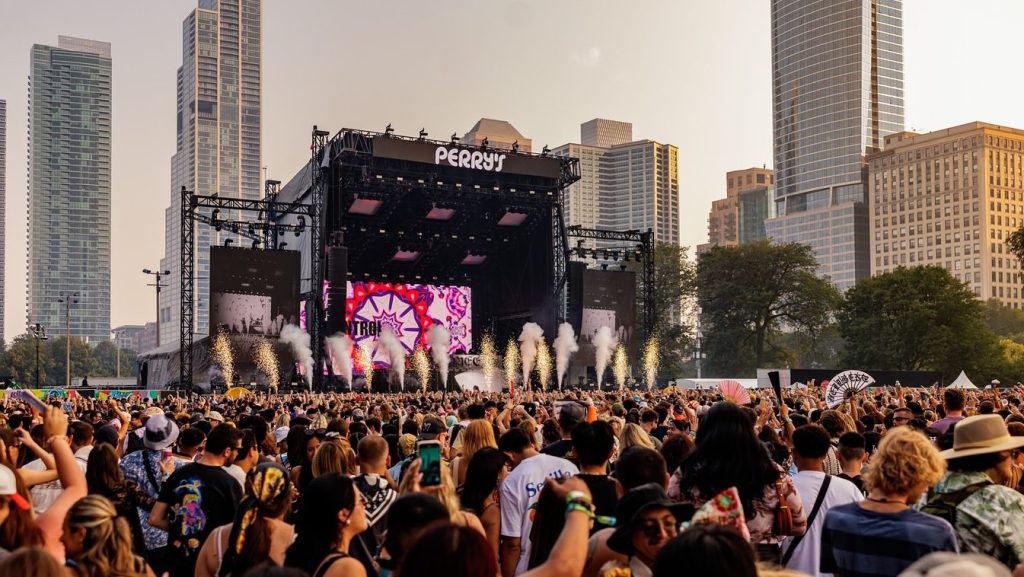
Check out last year’s fair!
Featured Image(s) Source: WORLDART Norman O’Flynn

Leave a Reply