
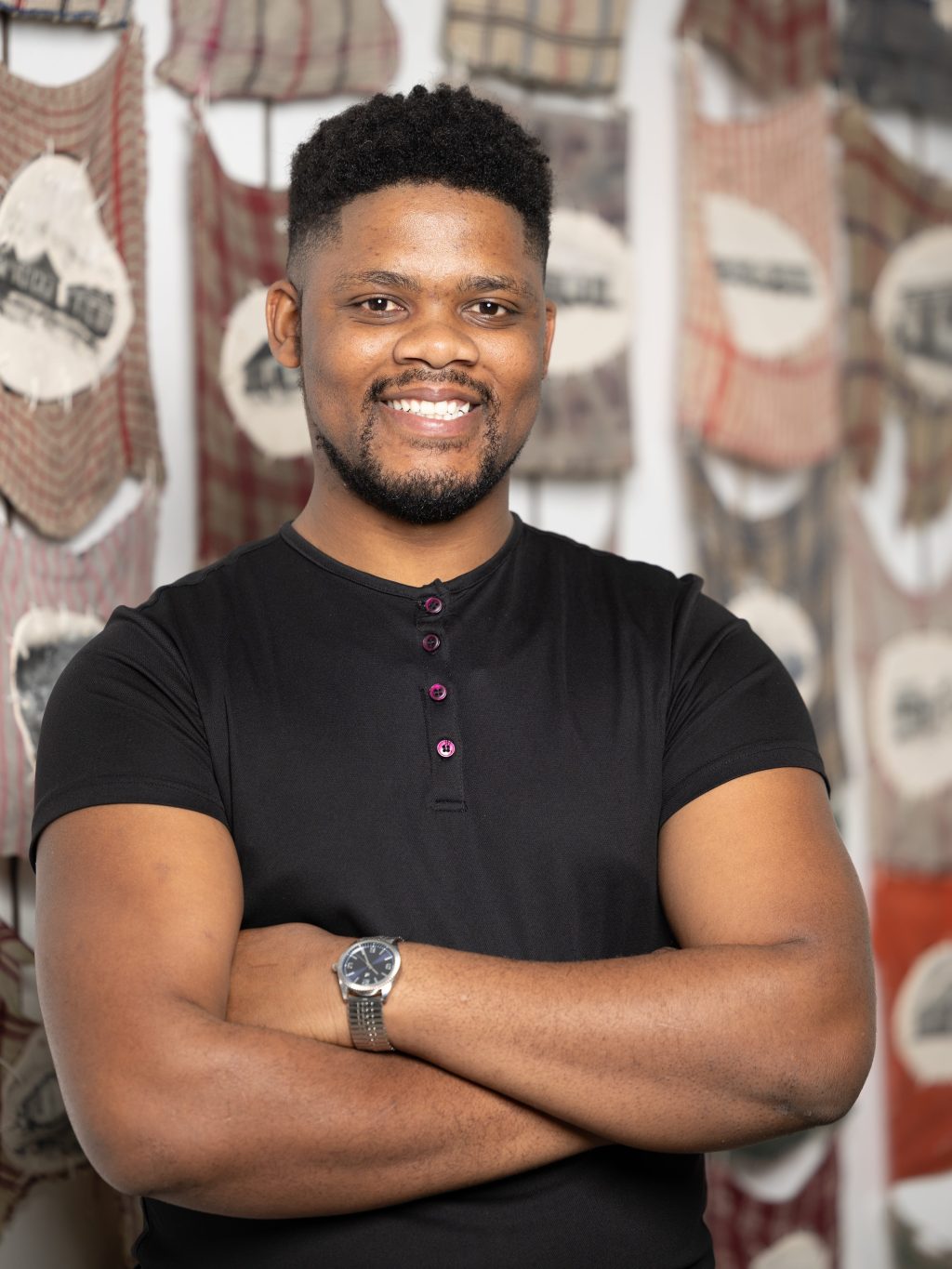
Tandabantu Nathaniel Jongikhaya Matola, a talented artist from Gqeberha and East London, is making waves in the South African art scene with his compelling ceramic works. At just 28 years old, Matola has been recognized as a runner-up in the Sasol New Signatures 2024 competition with his piece titled “Ukuncikelela,” which translates to “to hold on/endure.” Through this artwork, he addresses the socio-economic challenges faced by communities in rural South Africa.
Matola discusses his journey, his artistic inspirations, and his thoughts on the impact of his work.
Tell us what your reaction was when you received the news that your work had been selected?
[TANDABANTU MATOLA]: I was so excited I could not believe my work had reached the final 7. I am still trying to comprehend the news.
Is this the first time you have entered the competition? If so why and if not how many times and why is this competition an important one for you?
[TANDABANTU MATOLA]: Yes, it is the first time I have entered this competition. I have always wanted to participate but had little knowledge of how to do it. I could not take part previously until my ceramic lecturer told me and convinced me to enter for it. It is my first time entering work for a major competition like this, and it means a lot to be among the winners because it is where most young and upcoming artists begin their artistic trajectory and establish themselves in the South African art scene.
Tell us a little about your artistic journey up until the point of entering Sasol New Signatures 2024?
[TANDABANTU MATOLA]: I grew up in the rural town of Libode in the Eastern Cape, where I realised early that I had a gift for art. Post high school, I enrolled for a Fine Art Diploma at Walter Sisulu University in 2021, specialising in Ceramics. During my undergraduate, I participated in a student exhibition at the National Arts Festival. In 2023, I exhibited work at Ceramics Regionals Eastern Cape in Gqeberha and made a sale. I am currently working as a tutor for ceramics at the university. Having worked with my ceramic lecturer, he observed that I could actually start tapping into the art scene and he then encouraged me to consider entering the 2024 Sasol New Signatures Competition.
Who has had the biggest influence on your career as an artist to date?
[TANDABANTU MATOLA]: My former undergrad lecturer, advanced diploma supervisor, and who is my mentor, Mr Sonwabiso Ngcai, has had a very huge influence on me both artistically and personally.
Tell us a little about why you created the piece you submitted?
[TANDABANTU MATOLA]: Growing up in rural areas with consistent visits to other homes by virtue of friends and family, one develops an inquisitive eye for things, including objects in different spaces, especially as an artist. However, these observations are also made in one’s intimate space, like one’s own home. The observations are made unconsciously in situations where one is, after being served food, offered a dishcloth to wipe hands. It is through making these observations that the idea of interrogating UKUNCIKELELA was born because even at home, I noticed that the dishcloth is one of the items that people hold on to for so long, to the extent of getting too loose. Then, as an artist, this prompted me to investigate gathering dishcloths in my village in exchange for new ones. Not holding on to superstitions that come with taking a personal item from one’s home, people gave them to me willingly. For me, the dishcloth in my work symbolises the extent to which poverty can be seen in items such as dishcloths. And to me personally, it talks to perseverance and persistence.
Tell us about your preferred medium/s …and why?
[TANDABANTU MATOLA]: I consider growing up in rural areas a privilege because of the openness of space/earth and being intrinsically connected to it (earth). Clay is earth and is part of my upbringing. I grew up doing clay cows, and my love for clay grew from there but I never knew that it has such potential and depth, including integrating it with various materials (drawing with underglazes, glazes, oxides), let alone infusing it with found objects like fabric. I aim to grow in this medium and become a better ceramic artist.
When people view your work – what reaction/response are you hoping to create?
[TANDABANTU MATOLA]: With my art piece, I aim to tell the public about the difference along socio-economic lines and how people are, to a large degree, forced to hold on to things even to the extent of posing a threat to who they are and how they are being seen. Furthermore, I hope the viewer interacts with the materiality of the artwork that underpins its conceptual undertaking.
Why do you think your work was chosen as one of the winning works?
[TANDABANTU MATOLA]: I think my work was chosen because of both its conceptual and technical depth and how, overall, artistically underpinning small items like dishcloths can draw a conversation about social-economic dialogues.
How would winning this competition change your life?
[TANDABANTU MATOLA]: If I win this competition, my life personally and as an artist would be better because it means I could be able to purchase equipment like a kiln and start to work as an artist in my own studio. My aim is also to teach ceramics; having a studio will help me realise that dream. Also, winning this competition will bring hope to myself, my parents, my community, my province and most importantly, my schoolmates and lecturers.
Which South African artists do you admire and why?
[TANDABANTU MATOLA]: Mr Simphiwe Mbunyuza holds a special place in my life as a ceramic artist. It is not only because he makes exciting work of ceramics but because of his resilience as someone who comes from a rural town in the Eastern Cape. He is also a graduate of my university. And I aspire to be like him – being an established ceramic artist nationally and internationally.
Do you have an idea of what your solo exhibition would look like?
[TANDABANTU MATOLA]: I want to keep the concept of home and object as a main point of interrogation about socio-economic dialogue in my work using clay as the primary medium of expression.
Anything else you would like to add?
[TANDABANTU MATOLA]: I want to thank the judges for interacting and seeing value in my work. I would also like to thank the Sasol New Signatures for the opportunity to showcase my talent.
Featured Image(s) & Interview Source: Supplied



Leave a Reply