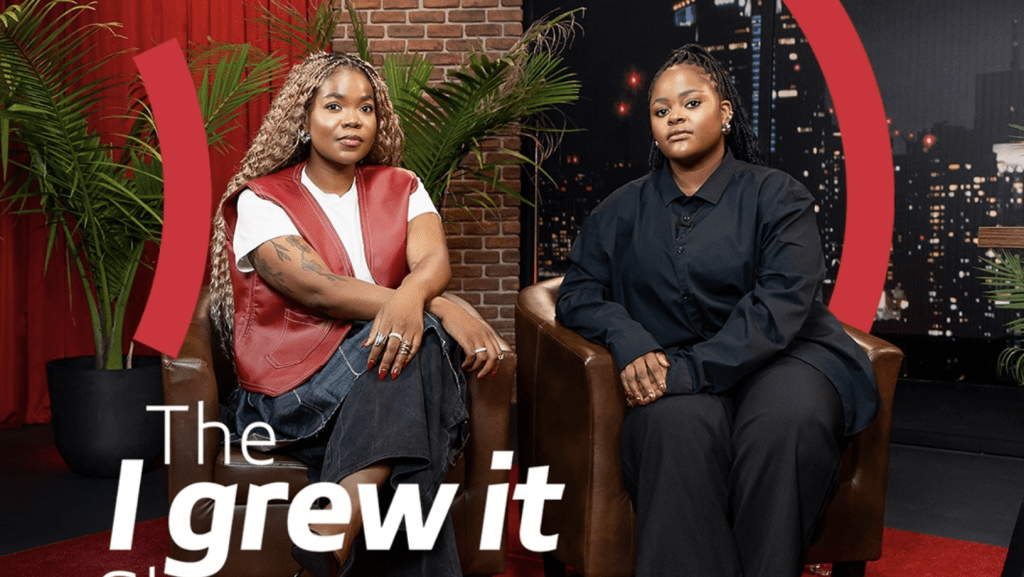
In this story, we highlight the fifth episode of a new YouTube series, The ‘I Grew It’ Show with Absa, that profiles young South African entrepreneurs using storytelling to drive social change and shape culture.
Key Takeaways From This
- Storytelling for Change: Three young creatives use media (magazine, film, community programs) to inspire and empower.
- iQHAWE Magazine: Run by Renaé Mangena and Anastasia Nkhuna, it supports African creatives through content, events, and networking. Sold out first print run at Decorex.
- Umphakathi Artists: Ntokozo Mlaba’s nonprofit screens local films in underserved areas and addresses social issues through art.
- Entrepreneurial Resilience: All three overcame challenges (self-funding, starting small) with creativity and partnerships (e.g., Absa).
👇🏾
Read the full press release below:
👇🏾

Discover how three young creatives are using storytelling to shape culture and drive social change
What do you do when you have a burning desire to bring life stories into the spotlight in a cluttered media environment? That’s the question three young creatives had to ask themselves when they set out to take the media world by storm. Renaé Mangena and Anastasia Nkhuna realised there was a gap in the market for a magazine to support creatives setting out on their career journeys, while Ntokozo Mlaba knew he could harness the power of film to look deep into issues facing communities in South Africa today.
Their own stories are an inspiring account of the value of just getting started, no matter what the circumstances may be. None of them had an easy start, but they were all on a mission to use storytelling as a way to foster positive change in society – and that’s just what they’re doing.
Renaé and Anastasia’s story
Renaé is the founder and editor-in-chief of iQHAWE Magazine, a vibrant digital and print publication that goes way beyond the ordinary. Launched in 2019, iQHAWE, which means ‘heroes’ or ‘champions’ in isiZulu, is by and for young African creatives, and champions both their stories and their careers. It has become a key creative resource, offering insightful content complemented by industry-focused events intended to empower emerging talent.
Originally from Limpopo, Renaé grew up in Johannesburg and went on to study at the Wits Film School. It was there that she set about exploring various options in the media space and decided to establish a multifaceted communications company, launching with a digital magazine.
“When I set up iQHAWE Magazine, I knew there was a real need to create a community for emerging creatives and to connect them to established creative industries” she says. “I wanted to celebrate and represent them by telling their stories and by bridging the gap between those who’re starting out and the various creative industries.”
She and Anastasia met at film school and developed a friendship that would go on to become the dynamic business partnership it is today.
“It was shortly after Covid hit when Renaé approached me to do social media for iQHAWE,” says Anatasia. “I started from the bottom and did a bit of everything; social media, photography – anything that needed to be done. I wanted to learn every aspect of the business because I wanted to know exactly how to tell great stories.”
Merging mad creative skills with business acumen, she brought a focused, strategic approach and a get-up-and-go attitude to iQHAWE, which has now developed into an integrated communications platform.
Ntokozo’s story
Ntokozo is a film director and the founder of Umphakathi Artists, a non-profit organisation that facilitates community development and impact programmes through the arts. He hails from Boksburg on the East Rand but feels a deep connection to his family’s rural home.
“I exist in this dichotomy of space,” he says, “moving between urban and rural environments. That’s what informs my practice as a filmmaker – and also as an entrepreneur.”
He started young by selling snacks at school, which imbued him with a keen sense of business and also an understanding of how he could use his influence to make a difference in communities. This resourcefulness and drive has stood him in good stead. When it came to funding his first film, he collected bottles and cans for recycling around the Wits Campus, supplementing his savings to bring his vision to life. His dedication did not go unnoticed. Absa recognized his talent and proudly partnered with him on his film, The Passage. This exciting collaboration took him all the way to New York, where he had the incredible opportunity to share his story with a global audience.
“At Umphakathi Artists, we not only get people involved in arts projects,” he says, ”but also empower them to be a positive influence in their communities. We want them to be able to help others bridge the gap between an idea and getting it done.”
Just one of the programmes run by Umphakathi, which appropriately means ‘commons’ in isiZulu, is Community Bioscope. On a monthly basis, the organisation sets up screenings of movies in underprivileged communities, often showing films made by local filmmakers. This not only opens up a world of ideas but shows the kids in those communities what’s possible for them.
Umphakathi’s influencer model, says Ntokozo, could be pivoted into other areas of development, such as in the medical space or the legal space. He envisions having forums in sectors such as these to help people bridge that important gap between concept and a successful commercial or professional enterprise.
‘I grew it’
Renaé, Anastasia and Ntokozo share their journeys and milestone moments in the fifth episode of a six-part series that launched on YouTube in April. The ‘I Grew It’ Show is more than just a showcase, it is a platform celebrating resilience, innovation, and the bold journeys of young South African entrepreneurs who have turned ideas into thriving businesses.Sponsored by Absa, it focuses on the unique ‘I grew it’ moments in the lives of the country’s young entrepreneurs.
“Our ‘I grew it’ moment came when we showcased the first print version of our magazine at Decorex,” says Anastasia. “Nearly 30,000 people attended the event and we completely sold out of that first edition. That was when we thought we did this!”
Today, iQHAWE not only informs but also creates opportunities for creatives to connect and grow. The magazine, supported by curated panel discussions and other events, is a leading light in South Africa’s creative landscape. It has become nothing less than a launchpad for the next generation of industry leaders.
Ntoko says the defining moment for Umphakathi came when it decided to screen 16 films in one day as part of its Community Bioscope programme. The marathon screening, to commemorate the Class of 1976 and their historic actions on 16 June of that year, was supported by Absa, and the films were shown throughout Soweto.
An earlier defining moment was when, at the age of 24, he wrote and directed the critically acclaimed short film The Passage, a 12-minute piece that delves into gender-based violence and township life. The film not only highlights pressing social issues but also showcases Ntoko’s prowess as a filmmaker who is committed to impactful storytelling.
The ‘I grew it’ Show with Absa is more than just a talk show. It’s a celebration of entrepreneurial stories and the power of what your story could look like if you started today. It’s about harnessing intention, mindset and action – and being brave enough to take that first step. It’s about always creating so that, one day, you too can look back and proudly say, “I grew it”!
Follow their journeys and get inspired to take your first step toward building something great. Catch The ‘I grew it’ Show with Absa on the Absa South Africa YouTube Channel.

Leave a Reply